



Santa’s secret to becoming the world’s most powerful brand?
It’s not the cookies. It’s not the sleigh. It’s not the flying reindeer. It’s not all the free toys. Santa’s secret is positioning.
But this wasn’t always the case. For centuries, Santa was a positioning disaster.
Every country had their version. Every illustrator had their interpretation. Dutch bishops. British father figures. American elves. Sometimes stern and punishing. Sometimes jolly. Sometimes terrifying children into good behavior.
Tall in one story, short in another. Gaunt as a scarecrow or round as a barrel. Green robes, brown furs, blue suits. He was never consistent. Neither was his story,
Most people credit Coca-Cola for positioning Santa, but they only provided half the strategy. Coca-Cola made Santa visible by creating his visual hammer, but it was Dr. Seuss that made Santa meaningful by creating his strategic enemy.
Santa’s Visual Hammer
In 1931, Coca-Cola commissioned illustrator Haddon Sundblom to create a Santa for their holiday campaign.
Here he is below. Look familiar? Yup. And that’s the point. Red suit. White trim. Round belly. Rosy cheeks. Always the same. Recognizable, memorable, consistent.
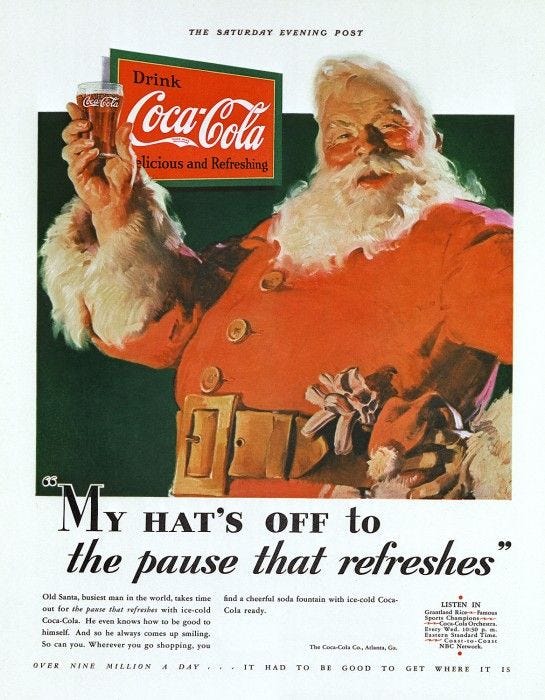
What Sundblom created was more than an image, it has become his visual hammer.
Coca-Cola never evolved Santa’s look to stay fresh. They didn’t run focus groups asking if consumers preferred more casual outfits in a range of colors over the red suit. They didn’t launch a slim Santa line extension to use for Diet Coke ads. They repeated the same visual for decades.
The visual hammer made Santa recognizable. But that is only half the story.
Santa’s strategic enemy is what made him unforgettable.
Santa’s Strategic Enemy
In 1957, Dr. Seuss gave Santa what Coca-Cola couldn’t: meaning through opposition. Seuss gave him a strategic enemy: The Grinch.
Every kid instantly understands what Santa represents because they know exactly what he’s fighting against. That’s the power of a strategic enemy. The contrast is what makes Santa’s positioning so clear and motivating.
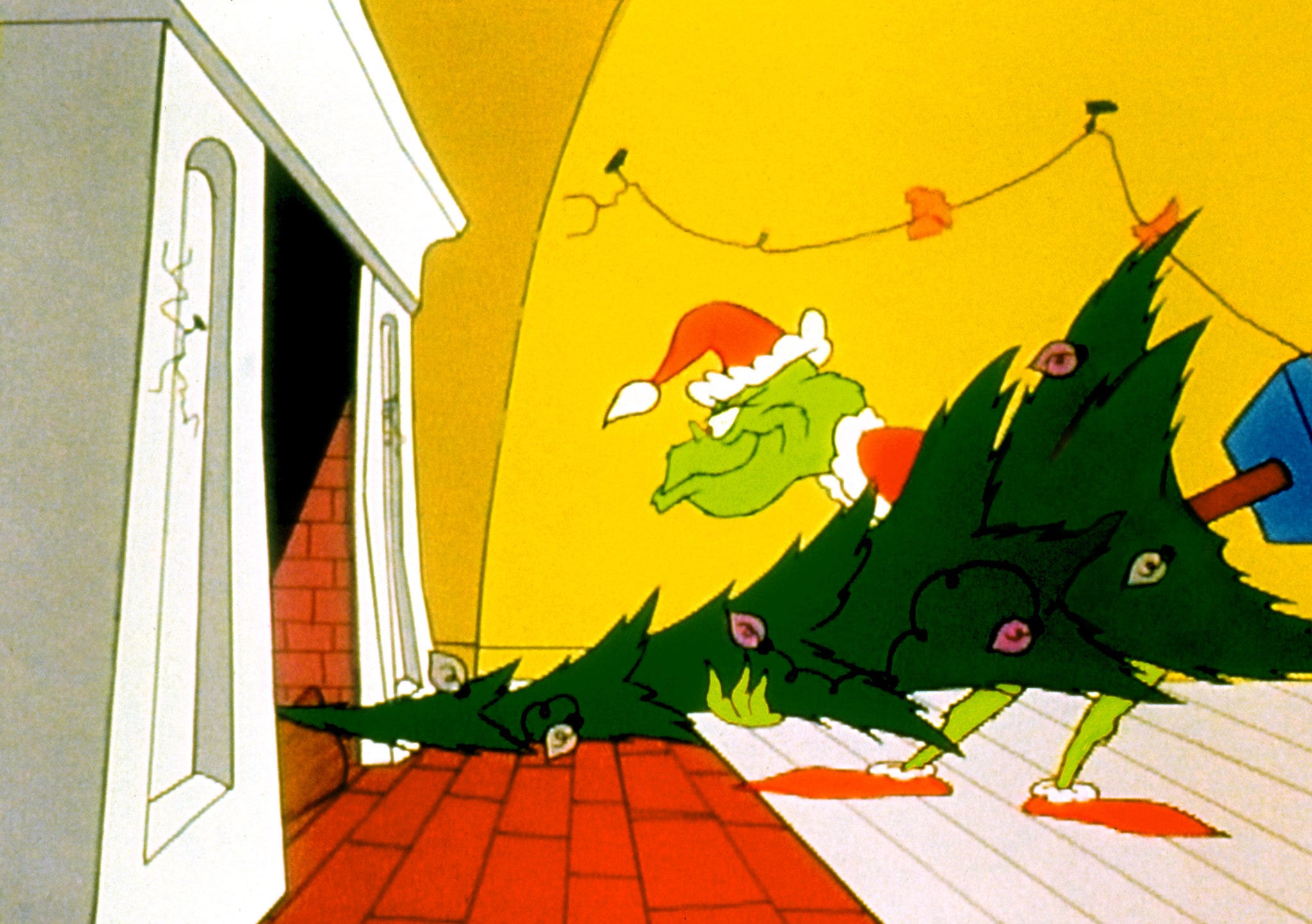
Every hero needs a villain that is the opposite, and the Grinch delivered in spades.
Green to Santa’s red.
Bitter to Santa’s joy.
Isolated to Santa’s community.
Taking to Santa’s giving.
Most brands would have done this backwards. They’d run ads bragging that Santa’s the “best gift-giver” with the “most efficient toy delivery system.” But positions are not defined by claims of being better. They are best defined by contrast.
If you read the book or watched the movie, you know the ending. Even the Grinch gets sold on Santa’s positioning.
The Grinch’s heart grows three sizes, he returns all toys and he joins the Whoville feast. He converts to Team Santa.
However, here’s the deeper insight: Santa doesn’t want total victory. He needs the mean old Grinch to come back next year. And the year after that. Because every time we retell the story, the Grinch reminds us what Santa stands for. The enemy reinforces his positioning.
Your Brand Needs a Grinch
Not someone you claim to be “better than.” But the force, idea, or concept you stand against.
Identifying the Strategic Enemy isn’t about manufacturing drama or picking a fake fight. It’s about recognizing what’s in the mind of the consumer and using it to sharpen and clarify your positioning.
And don’t forget the visual hammer. Santa didn’t just act different from the Grinch, he looked different too. Both matter.
The Perfect Stocking Stuffer!
This holiday season, give the gift everyone secretly needs: an enemy.
Not an actual enemy (your relatives probably have that covered).
But The Strategic Enemy the book that teaches you how to build a brand worth fighting for.
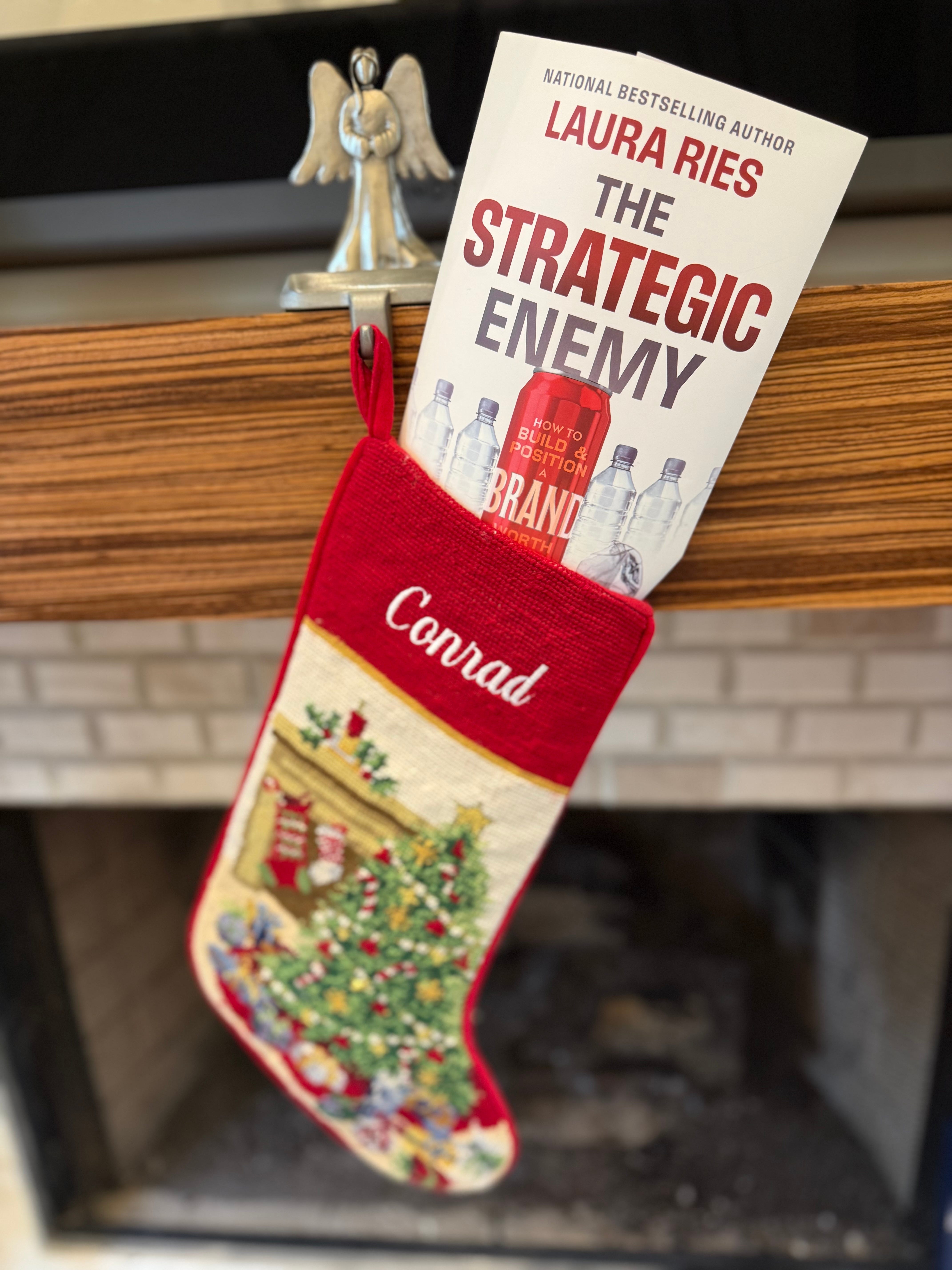
The perfect gift for:
The entrepreneur who thinks “we’re better” is a strategy.
The marketer who believes “everything for everybody” is positioning.
The college student learning the exact opposite of what actually works.
The colleague who swears another brand extension will fix everything.
Way more useful than another candle. Way more fun for the White Elephant.
And don’t just take my word for it. The Strategic Enemy was named one of the best books of 2025 by the Non-Obvious Book Awards!
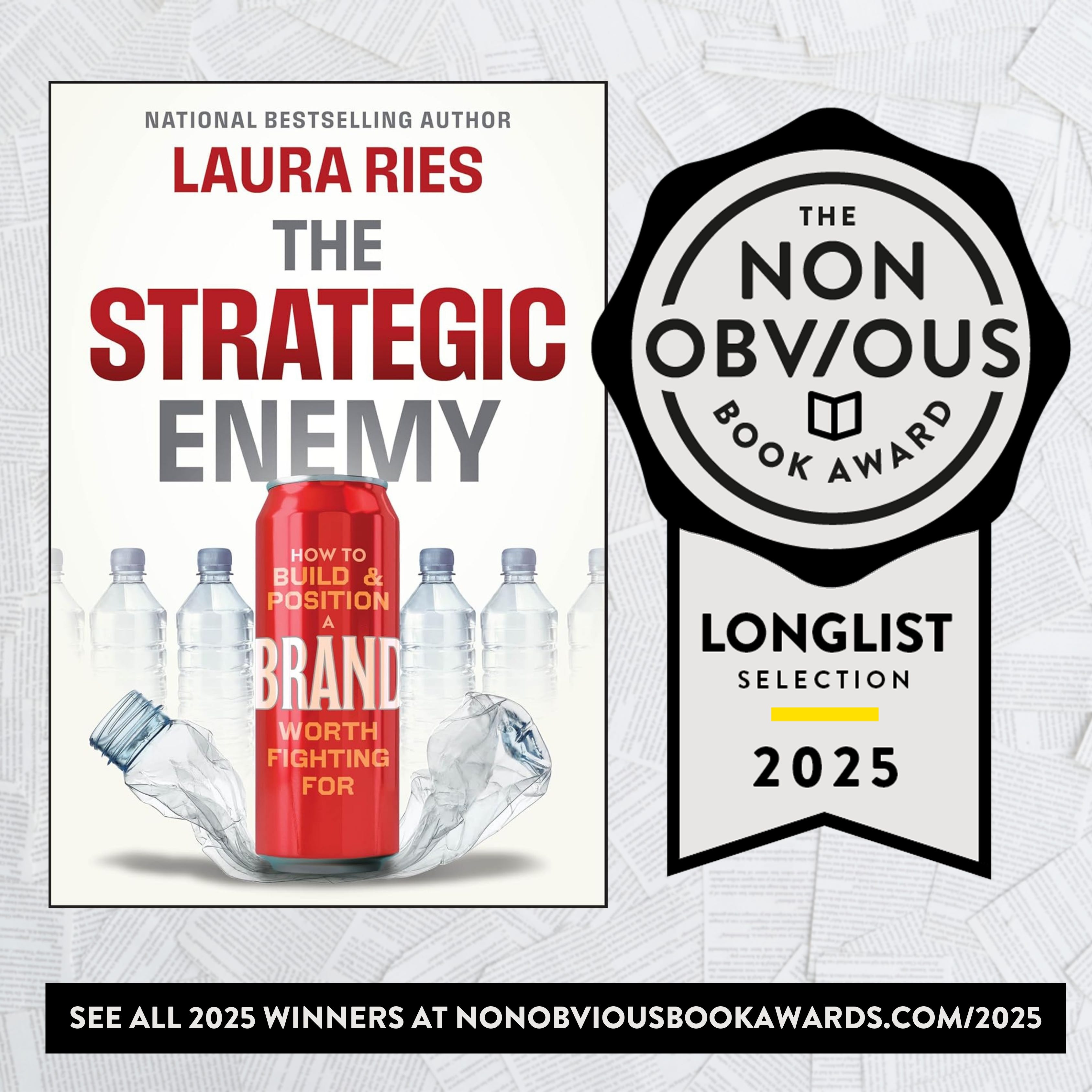
The Shortlist winners will be announced live on Dec 16 by Rohit Bhargava. I’ll be watching with my fingers crossed. My mom says my book is an obvious winner. She has a point. It is the non-obvious idea we all need right now.
While great positioning should ultimately feel obvious, what’s non-obvious is how much clarity and power you gain when you define a strategic enemy. The enemy delivers the contrast that sharpens your position and your focus. It rallies people. And it builds brands worth fighting for.
Checkout the full lineup of standout 2025 titles: https://www.nonobviousbookawards.com/2025/
Think The Strategic Enemy has a shot to win?
Brilliant, Laura! Flipping the tables to consider the Grinch vs. Santa is spot on and creates a twist that makes it a little easier to focus on the strategic enemy. Well done! Now, let’s have a little conversation about YOUR relatives. 😉