


2025 was an incredible year. And it wiped me out. I took a few weeks off to recharge my body and mind. Now I am back and more excited than ever to answer the call and help you leverage the power of positioning, the strategic enemy and the visual hammer.
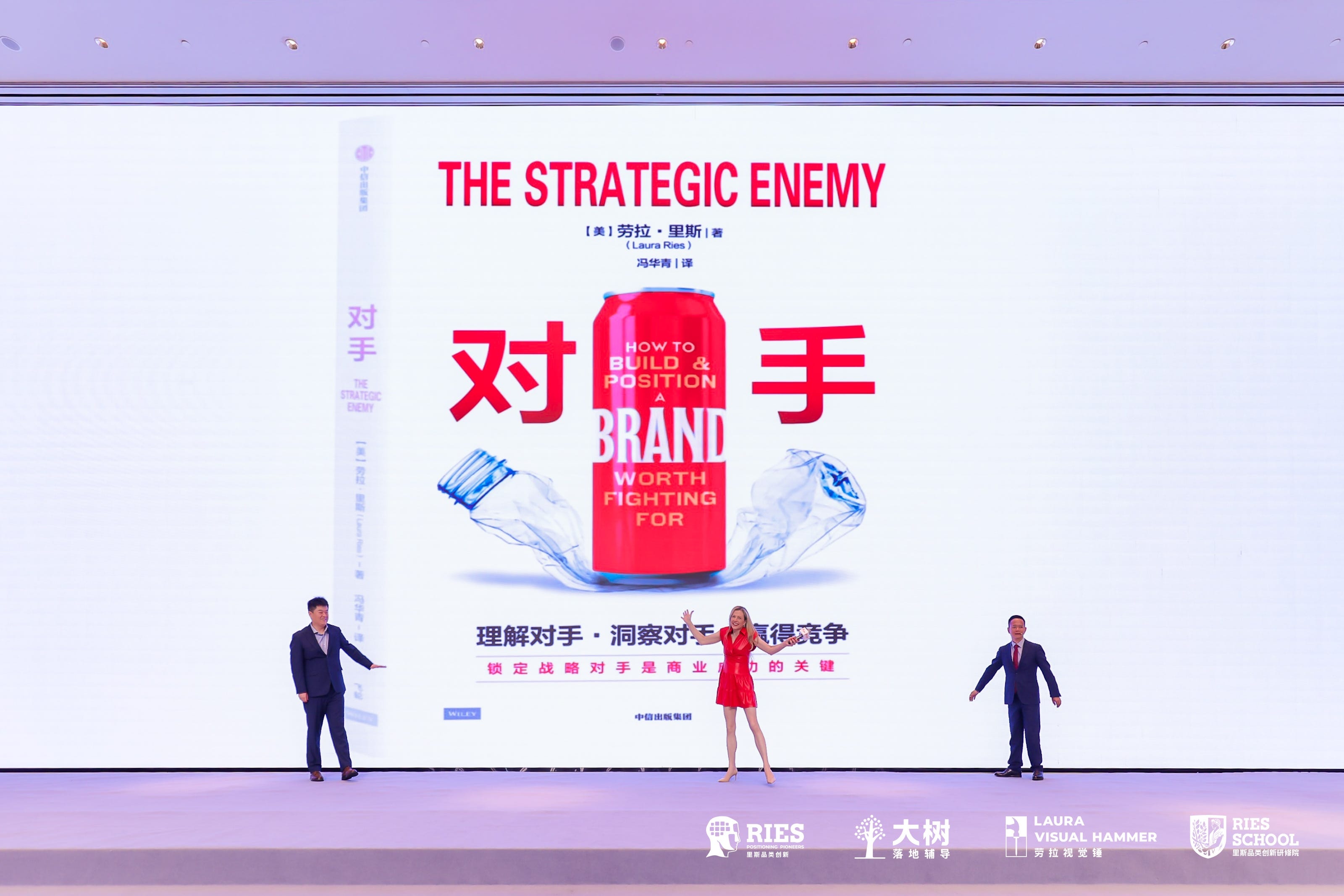
End of December I was in Shanghai to launch The Strategic Enemy in China!
My portable Red Positioning Hotline Phone was travelling with me and I am always excited to answer the call on positioning. This time, listen to when Ford called the Positioning Hotline about their F-150 Lightning disaster.
In May 2021, when Ford CEO Jim Farley and his team revealed the much-hyped F-150 Lightning truck in a Tesla-like presentation, the world expected a big success.
I did not. I was waiting for the fallout.
It came a few weeks ago when Ford Motor announced it was ending the money-losing F-150 Lightning and was taking a $19.5 billion hit.
The WSJ cited the cause for the failure as simple: "Ford’s EV truck failed to live up to customers’ expectations.”
Exactly!
When you name the Truck an F-150 the expectations are set. That’s why categories demand new brands.
Failing to use new brands continues to be the biggest mistake traditional automobile companies make: they launch electric vehicles with their existing gas brand names. And the stronger the brand, the more problematic this is.
In some cases, manufacturers boast offering the same model in both electric and gas versions that look practically identical. Most consumers don’t want an electrified version of a brand; they want a brand that stands for electric and most importantly looks like a real electric.
The Ford F-150 is the longstanding global leader and is America’s best-selling pickup truckfor more than 40 consecutive years. Without a doubt, the F-150 owns the pickup truck folder in the mind.
So, in 2022, Ford expanded the brand with the F-150 Lightning electric truck. Seems logical. Why wouldn’t the leading brand synonymous with pickup trucks not offer an electric version too? With more consumers considering electric vehicles, Ford expected to leverage its leadership by offering the F-150 in both a regular and an electric version.
When Ford started production of F-150 Lightning, they even called it a “Model T moment.” A Model T moment? The Model T represents one of the greatest moments of brand history. One car, one model, one color, one price that changed history. The Lightning was none of these.
When it comes to categories, our minds don’t necessarily react logically. It’s what makes branding so challenging. Using the name from your current category folder and stretching it over on a new one, will only result in weakening the meaning of your brand in the mind. Being focused on the other hand, allows you to clearly define who you are and what you stand for. When you use the same name on both categories, it won’t allow you to say anything too specific or powerful, which is why the world’s number one pickup truck brand is at a disadvantage moving into electric trucks using the same brand name. Consumers don’t think Ford first and then decide gas or electric. That is the crucial mistake. Electric isn’t a flavor; it is a category folder that greatly benefits from and requires a new brand dedicated to it.
Ford was also late to the game of electric trucks. In general, big companies wait too long to realize the significance of a new category when these start out small. They prefer to wait and see if it becomes a big deal and then figure they can line-extend their established brand and poor in money to make up for lost time.
Rivian, was the first electric truck on the market and most importantly in the mind. Initially launched as Mainstream Motors in 2009, they decided in 2011 to focus exclusively on electric trucks. Wisely, they rebranded themselves as Rivian a whole decade before the F-150 Lightning.
As a result, the electric truck folder in the mind belongs to Rivian. Not only that, when you see a Rivian, you know it. Despite only having a few thousand on the road, most people can remember seeing one because of its distinctive headlights.
Category folders in the mind rarely converge. More often they diverge and separate over time. Brands that try to use one brand on too many different folders risk diluting their position. Even worse, they lose the opportunity to have a distinct enemy to fight against.
The enemy of Rivian is clear: gasoline trucks.
Ford would have been wiser to keep the F-150 as the focused leading gas truck brand. Instead they should have launched a new electric only truck brand—one that would have been uniquely identifiable on the road and that could have built a powerful differentiating positioning in the mind.


